
What Is LTL Shipping? Less-Than-Truckload Basics for Small Businesses
LTL shipping — less-than-truckload shipping — is freight that takes up part of a trailer instead of the whole thing. Usually that means 150 to 15,000 pounds, or one to six pallets, riding alongside other companies' freight. You pay for the space you use, not the full 53-foot truck.
Here's the quick hierarchy:
Parcel: under 150 pounds. Boxes, not pallets.
LTL: a partial trailer, shared with other shippers.
FTL: full truckload. You book the whole trailer and it goes straight through.
The trade-off with less than a truckload shipping is simple. You save money by sharing the trailer. You pay for it in transit time and handling.
There's a third option most small shippers don't have on their radar: hotshot hauling. An independent driver with a pickup, cargo van, box truck, or flatbed trailer takes your load direct — no terminals, no sharing, no waiting for the trailer to fill.
Below we walk a pallet through the actual LTL journey so you can see where the days and the damage come from, then explain when a hotshot driver is the better call. LTL isn't always the wrong answer. It's just the wrong answer more often than most shippers realize.
How does LTL shipping actually work?
Follow a single pallet from your dock to your customer's.
Pickup. A local driver collects your pallet, usually on a route with a dozen other stops.
Origin terminal. Your pallet comes off the truck, gets scanned, and waits on a dock floor.
Sort and consolidate. Your freight gets re-sorted onto a line-haul trailer headed in roughly the right direction.
Line-haul to a hub. The trailer runs to a regional hub — which may not be on the way to your customer at all.
Sort again. Off, scanned, re-sorted, back on.
Line-haul to destination terminal. Another leg, another dock.
Local delivery. A final driver runs it out with the day's other stops.
That's hub-and-spoke consolidation, and LTL carriers do it because it's the only way the math works. A trailer running half empty loses money. So trailers generally don't move until they're economically full — which means the carrier's load factor sets your departure time, not your deadline.
Count the touches. Between your door and the receiver's, a single pallet typically gets loaded and unloaded four to six times. Every one of those is a forklift near your freight.
The paperwork LTL shipping requires
LTL runs on documentation, and getting it wrong costs money:
Bill of lading (BOL): the contract and the receipt. It describes what's on the pallet, who's sending it, and who's receiving it.
Freight class: a number from 50 to 500 based on density, stowability, handling, and liability. Low class means dense and cheap to ship. High class means light, bulky, or fragile.
NMFC codes: the commodity codes that determine your class. Guess wrong and the carrier will correct you — after pickup.
Accessorials: every service beyond dock-to-dock, each with its own line-item charge.
How long does LTL shipping take?
Regional lanes under 500 miles often run one to three business days. Cross-country moves commonly run five to seven business days or more. Add a day for every hub the freight passes through and another for weekend dwell.
And understand what "in transit" means on a tracking page. It means the freight is in the carrier's network. It does not mean anything is moving. A pallet sitting on a dock floor in Memphis for 36 hours is "in transit."
What do LTL carriers charge for, and why is the quote never the final price?
Your base rate comes from freight class, weight, dimensions, density, and the lane itself. LTL carriers price lanes differently depending on how much freight they already move in that direction — a backhaul into a hub they're feeding anyway is typically cheaper than an outbound into a market they rarely serve.
Then come the add-ons that catch small shippers off guard:
Liftgate: if the pickup or delivery site has no dock.
Residential delivery: and yes, a home-based shop counts.
Limited access: jobsites, farms, schools, military bases, storage facilities.
Inside delivery: anything past the tailgate.
Reweigh and reclass fees: the carrier measures and weighs your pallet, and if it doesn't match your BOL, they rebill.
Detention: the driver waits too long at your dock.
Fuel surcharge: a percentage add-on layered on top of the base rate, adjusted regularly.
The reclass is the one that wrecks budgets. You quote a pallet at class 70, the carrier dimensions it and calls it class 125, and a $340 shipment becomes $610 on an invoice that shows up three weeks later. You already delivered the job. The margin is gone.
Practical fix: measure and weigh the pallet before you book. Length, width, height at the tallest point including the pallet itself, and actual scale weight. Not an estimate. Not last time's numbers.
When does LTL shipping make sense?
Plenty of times. LTL shipping is the right tool when:
The freight is palletized, durable, and non-urgent.
The lane is long — cross-region or cross-country, where cost per pound really does dominate.
The delivery window is flexible, measured in "this week" not "before the crew starts."
It's recurring replenishment — stock moving to a warehouse on a predictable cycle.
The load is over 10,000 pounds or needs the volume of a full 53-foot trailer. At that point you're comparing LTL to FTL, not to anything smaller.
Here's the test that saves you the most arguments: if nobody is standing around waiting on this freight, LTL is probably fine.
Where does LTL shipping break down for small businesses?
The failure points are structural, not the fault of any one carrier.
Your freight waits on someone else's economics. The trailer leaves when it's full. If Tuesday's outbound is light, your pallet sees Wednesday.
Every handoff is a chance to lose something. Four to six touches means four to six opportunities for a forklift tine through a crate, a mis-sorted pallet headed to the wrong hub, or a shrink-wrapped stack that arrives leaning.
Tracking tells you where it was. Terminal scans are events, not locations. You know it cleared Dallas at 4 a.m. You don't know if it's on a trailer or on a dock.
There's no one to call. You reach a dispatcher, who contacts a terminal, who may or may not get the driver on the phone. By the time an answer comes back, your customer has already called you twice.
Mid-mile is where the whole model gives out. The 50 to 500 mile moves between suppliers, yards, jobsites, and shops were never what hub-and-spoke was built for.
You've seen how that looks on the ground:
A roofing crew sitting on a deck at 9 a.m. because the underlayment is still at a terminal 80 miles away.
A dealership holding a customer's car — and a sale — on one back-ordered part.
A jobsite shutting down because a single bracket didn't make the trailer.
The freight bill on those shipments is rarely the expensive part. The idle crew is.
What is hotshot shipping, and how is it different from LTL shipping?
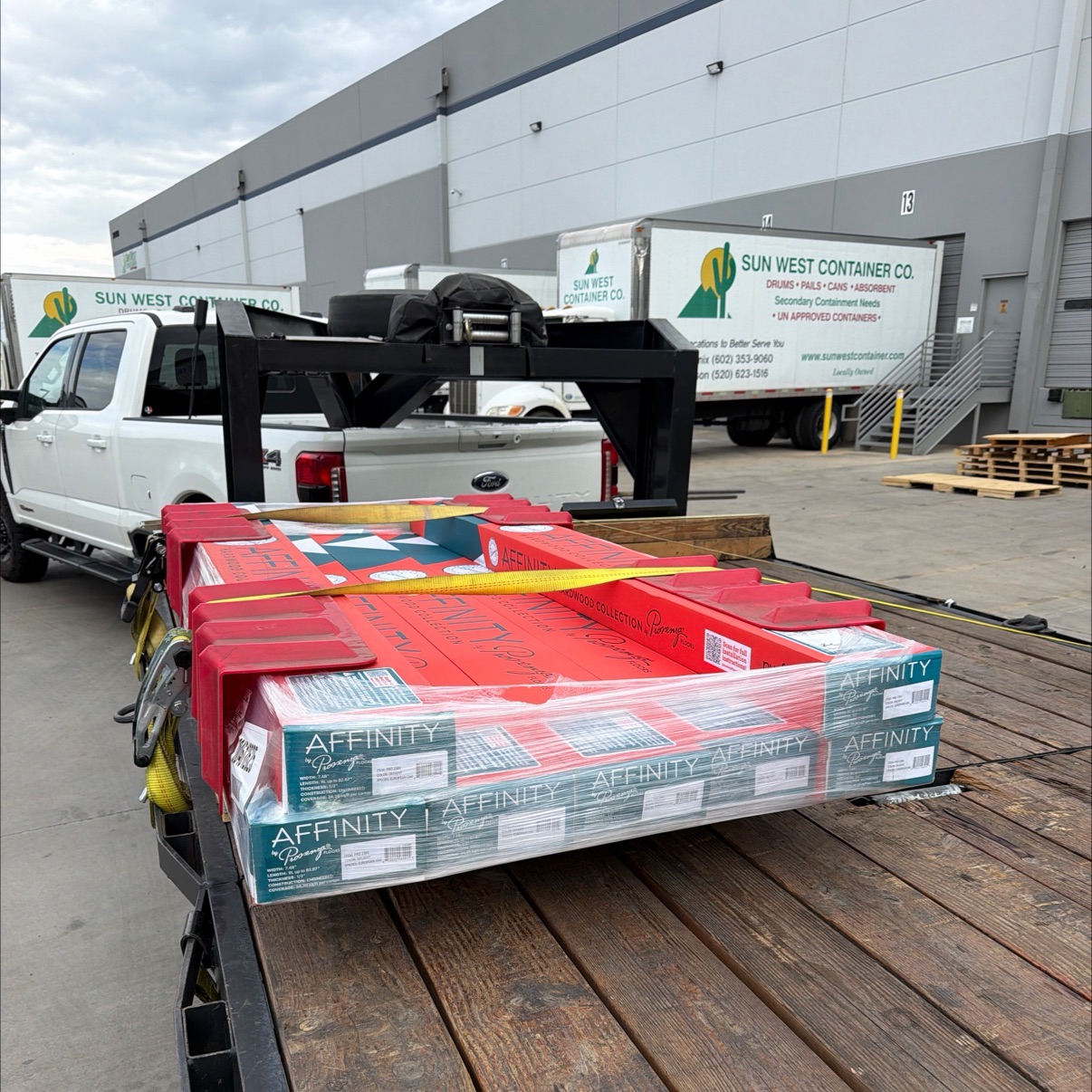
Hotshot shipping is an independent driver with a pickup truck, cargo van, box truck, or flatbed trailer taking your load direct from pickup to delivery. It loads, it drives, it arrives.
The structural difference is everything: no terminals, no consolidation, no waiting for a trailer to fill. One load, one driver, one trip. And only three parties involved — the shipper, receiver, and driver. Nobody in the middle to relay a question through.
The capacity argument is worth sitting with. There are roughly 16 million pickup trucks and trailers already on the road in this country. Hotshot taps that existing fleet instead of queuing behind a constrained semi-truck market, so when truckload capacity tightens, hotshot drivers are often still available.
What fits: anything under 10,000 pounds that goes in a truck bed, cargo van, box truck, or trailer. Lumber, shingles, HVAC units, engines and transmissions, pallets of parts, equipment, ag inputs, medical supplies.
Who uses it: construction and roofing companies, car dealerships and auto parts shops, manufacturers, agriculture operations, defense contractors and the DOD, and about twenty other industries that live or die on mid-mile trucking.
The honest limit: over 10,000 pounds, or when you genuinely need full-trailer volume, book FTL. Hotshot isn't trying to be a semi.
LTL vs. hotshot: which one should you book?
LTLHotshot Transit time1–7+ business days, network-dependentSame day to next day, direct Handoffs4–6 touchesOne load, one driver Pricing modelClass, weight, dims, lane, plus accessorials and fuelInstant quote on the job you posted TrackingTerminal scansLive tracking in the platform Weight range150–15,000 lbsUp to 10,000 lbs Who you talk toA dispatcher, then a terminalThe driver hauling your load Best forFlexible, palletized freight on long lanesDeadline-driven mid-mile moves
Rule of thumb: deadline-driven and under 10,000 pounds, go hotshot. Flexible, palletized, and on a long lane, go LTL.
On cost, be fair to both. LTL frequently wins on cost per pound — that's the whole point of sharing a trailer. Hotshot can win on total cost when you count the things that don't show up on a freight invoice: a crew standing around, a bay tied up, a damage claim you spend six weeks documenting, a customer who doesn't reorder.
Most small shippers should use both. The load tells you which one.
How do you book a hotshot load on a shipping marketplace?
The process is short by design.
Post the job. Pickup and delivery addresses, weight, dimensions, vehicle type, and your timing window.
Get an instant quote. See the number before you commit to anything.
A driver claims it. Hotshot drivers pick up jobs through the Open Road app, running professionally inspected trucks, trailers, and vans.
Track it and talk to the driver. Live tracking and direct messaging in one platform until the load is delivered.
Quotes are free, and so is a walkthrough of the platform if you'd rather see how it handles your lanes before you post anything.
If you're on the other side of it — you own the truck — the marketplace works the same way in reverse. You set your own schedule, claim the loads you want, and get paid the same day.
LTL shipping FAQs
What weight range counts as LTL shipping?
Generally 150 to 15,000 pounds. Under 150 pounds you're in parcel territory. Above 15,000 pounds, or when you need the full trailer, you're looking at FTL.
How long does LTL shipping take?
Regional lanes commonly run one to three business days; cross-country five to seven or more. Transit time depends on how many terminals your freight passes through, not just the mileage.
What is freight class and do I need to know mine?
Freight class is a number from 50 to 500 based on density, stowability, handling, and liability. Yes, you need it — a wrong class triggers a reclass fee after pickup, when you can't do anything about it.
Is LTL shipping cheaper than hotshot shipping?
Often on cost per pound, especially on long lanes. Not always on total cost. Once accessorials, fuel surcharges, and the price of waiting are counted, a direct hotshot run on a mid-mile move can come out ahead.
Do I need a pallet for LTL?
Practically, yes. LTL carriers move freight with forklifts, and loose or unpalletized items take more handling, more damage risk, and often higher class ratings. Hotshot drivers can take palletized or loose freight — whatever fits in the bed, van, or trailer.
What can a hotshot driver haul?
Anything under 10,000 pounds that fits in a truck bed, cargo van, box truck, or on a flatbed trailer. Building materials, equipment, auto parts, ag supplies, medical inventory, machinery components.
What happens if my LTL freight is damaged in transit?
You file a claim with the carrier, and you'll need the bill of lading, delivery receipt with damage noted at the time of delivery, photos, and proof of value. Note the damage before you sign — a clean signature makes the claim much harder.
Carrier liability is usually limited by freight class, not by what your goods actually cost you. Fewer handoffs is the better strategy than a better claims process.
Discover
Convenience.
Ship with
Open Road.
Create your account and get shipping.
Being a driver
couldn’t be simpler.
Ready to work your own schedule and get paid that same day? Get in touch with us and we will get you on the road.