
How an On-Demand Delivery Platform Moves Freight the Same Day

What is an on-demand delivery platform?
An on-demand delivery platform is a shipping marketplace where you post a load, available drivers claim it through an app, and you track it to the door — often the same day. No scheduled pickup window. No waiting for a trailer to fill.
Compare that to traditional less-than-truckload freight: you call a broker, wait on a quote, then book a pickup two to five days out and hope the terminal doesn't slow it down.
The difference isn't software. It's where the capacity comes from. There are roughly 16 million pickup trucks and trailers already on the road in this country, and a lot of them are owned by hotshot drivers who haul for a living. An on-demand platform taps that pool instead of waiting on constrained semi-truck capacity to free up.
Here's exactly what the four steps look like — post, claim, track, deliver — and where the days actually disappear.
Why does booking a traditional carrier take days?
The transit time is rarely the problem. The waiting is.
Start with the quote. You submit a request, someone reviews it, you get a number back, then you go back and forth on accessorials, liftgate fees, and residential surcharges. That's a day, sometimes two, before anything has moved.
Then there's pickup. Carriers run routes. Your freight gets slotted into a window that works for the route, not for your jobsite. If you miss it, you wait for the next one.
Then comes the part most shippers never see. Traditional LTL runs on hub-and-spoke routing. Your pallet doesn't go from A to B — it goes to a terminal, gets cross-docked onto another trailer, rides to a second terminal, and maybe gets handled again before it reaches the receiver.
Every touch is a delay. Every touch is also a chance for something to get dropped, scraped, or set down in the wrong bay.
Mid-mile freight is the gap nobody built for. It's too big for a courier and too small to justify a full truckload. Four pallets of shingles. A pallet of brake rotors. One transmission. Traditional systems weren't designed to move that quickly, so they move it slowly and cheaply instead.
The wait has a price, and it usually isn't on the freight invoice. It's a roofing crew of five standing on a deck with nothing to nail down. A dealership holding a customer's car because one part is three states away. A production line down over a $400 bearing.
Put it the way a shop foreman would: the part costs less than an hour of the line being down. Getting it there that afternoon isn't the expensive option. Waiting is.
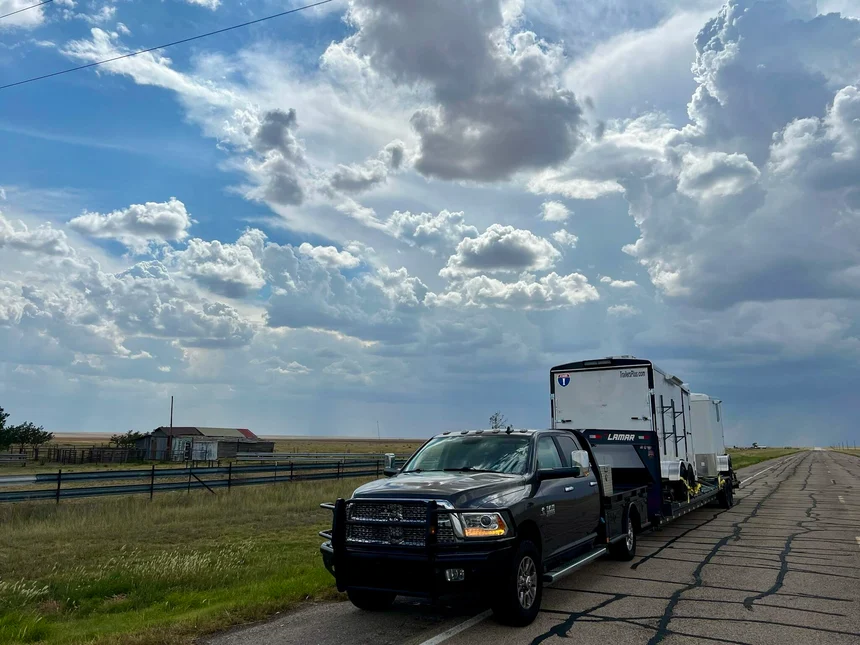
Step 1: How do you post a job on a shipping marketplace?
Posting a load takes a few minutes. You enter the pickup and drop-off addresses, the pickup window, the weight and dimensions, the vehicle type you need, and any special handling — fragile, strapped, tarped, needs a hand unloading.
Picking the right vehicle
Four options cover most mid-mile freight:
Pickup truck — small loads, parts, tools, anything that rides in a bed.
Cargo van — enclosed and dry, good for boxed goods, electronics, and medical supplies.
Box truck — palletized freight and bulkier items that need volume more than weight capacity.
Flatbed trailer — lumber, steel, equipment, anything long or awkward that loads from the side.
The rule of thumb: if it's under 10,000 pounds and it fits in a truck bed, a van, or on a trailer, a hotshot driver can haul it.
You see the price before you commit
This is the part that surprises shippers coming from brokered freight. You get an instant quote, not a quote request. The number is on screen while you're still deciding whether to send it. No phone tag, no waiting on a rate sheet.
Four things that get your load claimed faster
Accurate weight and dimensions. A driver who shows up to a load twice the size described will decline it, and you've lost an hour.
A realistic pickup window. Tight is fine. Impossible is not.
Clear loading instructions. Gate code, which door, who to ask for.
Dock or no dock. Say it up front. A driver bringing straps and a helper plans differently than one expecting a forklift.
If you've never posted a load before, running a free quote on a lane you already ship is the lowest-friction way to see what this actually costs on your freight, not in the abstract.
Step 2: How fast do hotshot drivers claim a load?
Once your job posts, it goes out to hotshot drivers already near the pickup. Nobody is dispatching a truck from three states away and calling it same-day. The truck is usually already in the metro, sometimes already on that side of town.
Hotshots set their own schedule. They pick jobs that fit the route they're already running, which is why coverage tends to be dense on short-notice regional lanes — the exact lanes traditional carriers treat as an afterthought.
Same-day pay is a shipper benefit even though it reads like a driver benefit. Drivers who get paid the day they haul stay active and stay responsive. A supply side that's motivated is a supply side that claims your load at 7:40 a.m. instead of sometime tomorrow.
And these aren't strangers with a tailgate. Hotshot drivers on the platform run professionally inspected trucks, trailers, and vans.
If a load sits unclaimed
It happens, usually for one of three reasons: the pickup window is too narrow, the vehicle type is wrong for the freight, or the rate doesn't match the lane. Widen the window by an hour, check whether a box truck would serve better than a flatbed, and re-post. Stalled loads often move after a single adjustment.
Step 3: What does tracking look like once the load is moving?
Same place you posted the job. You see the truck from pickup to drop-off — no separate portal, no calling for a status update that's already four hours stale.
You also talk to the driver directly. Not a broker relaying a message. Not "let me check with dispatch and call you back." If the receiver moved the delivery from the front office to the back gate, you tell the person actually driving the truck.
That's the structural advantage. Three parties: the shipper, receiver, and driver. That's it.
Every additional party in a freight chain is another place information goes to die, and traditional LTL stacks up a lot of them — broker, carrier dispatch, origin terminal, line-haul driver, destination terminal, delivery driver.
Loop the receiver in and the crew on site knows when to stop what they're doing and unload. That matters more than it sounds. A jobsite that knows the truck is twenty minutes out has somebody with a forklift waiting. A jobsite that doesn't has a driver sitting at the gate.
At the door, you get proof of delivery and documentation attached to the job.
Step 4: What happens at delivery — and afterward?
Direct point-to-point means your freight gets touched twice: loaded and unloaded. No terminal. No cross-dock. No second trailer. For fragile freight, glass, finished goods, or anything with a paint job on it, that alone is worth the booking.
Delivery confirmation, photos, and the delivery record stay with the job. When a receiver says the pallet arrived short or the crate arrived scuffed, you have timestamped photos from the door instead of a claims process that drags on for weeks.
If you ship regularly, the dashboard is where this stops being a one-off. Repeat lanes, multiple active shipments, and a history you can actually reference when you're building next quarter's freight budget.
The teams that get the most out of on-demand hauling build it into standing process — the Tuesday parts run, the material drop before every jobsite start, the dealer trade lane they run twice a week. It's not an emergency button. It's a lane.
When does on-demand beat a scheduled carrier — and when does it not?
Being honest about this makes the choice easier.
On-demand hotshot wins when
The load is under 10,000 pounds.
It's time-sensitive — today or tomorrow, not "this week."
It's regional or mid-mile, the distance a truck covers in a day.
The freight is fragile or high-touch and you want fewer hands on it.
The job appeared this morning and wasn't in anyone's plan.
Traditional freight still wins when
You're filling a full truckload.
You're going cross-country and the economics of line-haul take over.
It's a bulk shipment with a genuinely flexible deadline.
You need temperature control or specialized equipment beyond standard hotshot gear.
The cost question
Don't compare a hotshot rate to the cheapest LTL quote in a vacuum. Compare it to the cost of the wait. Six people on a roof for half a day, a service bay sitting idle, a customer who goes somewhere else — those numbers are real, they're just on a different line of the P&L.
Side by side, the structural differences generally look like this:
Lead time: hours on-demand, versus two to five days scheduled.
Handling touches: two, versus four to six through terminals.
Tracking visibility: live and continuous, versus scan events at checkpoints.
Communication path: straight to the driver, versus through a broker and a dispatcher.
Which industries use on-demand hotshot delivery most?
Construction and roofing. Materials to an active jobsite the same day. Shingles, lumber, fasteners, a replacement compressor — the stuff that decides whether a crew works or waits.
Car dealerships and auto parts. Dealer trades and parts runs that keep bays turning. A vehicle sold at one store and sitting at another is inventory nobody is getting paid for.
Manufacturing and agriculture. Replacement parts and equipment where late isn't inconvenient, it's a stopped line or a crop window closing.
Medical supplies, defense contractors, and DOD work. Freight where timing and a clean chain of custody matter as much as the rate, and where fewer handoffs is a feature, not a preference.
There are 20-plus industries running loads through the same four steps. The freight changes. The process doesn't.
It comes back to the same idea every time: Timing is Everything. Cheap freight that shows up Thursday isn't cheap if you needed it Monday.
How do you get started with an on-demand delivery platform?
Start with a lane you already ship. Post the job or pull a free quote and see the real number on real freight — that tells you more than any comparison chart.
If you move loads regularly, a platform demo is worth the twenty minutes. Seeing the dashboard with repeat lanes and multiple active shipments on it is different from reading about it.
And if you own a pickup, van, or box truck: download the Open Road driver app, get set up, claim jobs that fit your route, and get paid the same day you haul. Your truck is already out there. It might as well be loaded.
Four steps, start to finish — post the load, a hotshot driver claims it, you track it live, it gets delivered direct. Often the same day.
Discover
Convenience.
Ship with
Open Road.
Create your account and get shipping.
Being a driver
couldn’t be simpler.
Ready to work your own schedule and get paid that same day? Get in touch with us and we will get you on the road.